



Foreign Policy Discussion 5 FPCI: FOREIGN TERRORIST FIGHTERS and the GROWING SECURITY ISSUE IN SOUTHEAST ASIA
Jakarta – On October 11, 2019, FPCI Chapter BINUS University held a Foreign Policy Discussion (FPD). The event was a collaboration with Arvin Dimitris, an International Relations student at BINUS. The discussion title was “Foreign Terrorist Fighters (FTF): Growing Security Issue in Southeast Asia.” FPCI resumed its regular discussion activities after the semester break.
The FPD was attended by members of FPCI Chapter BINUS University. Willy D. Yudha, President of FPCI Chapter BINUS University, opened and moderated the discussion. The session began with a “news flash” segment. Members briefly shared news they had read or watched in the previous week.
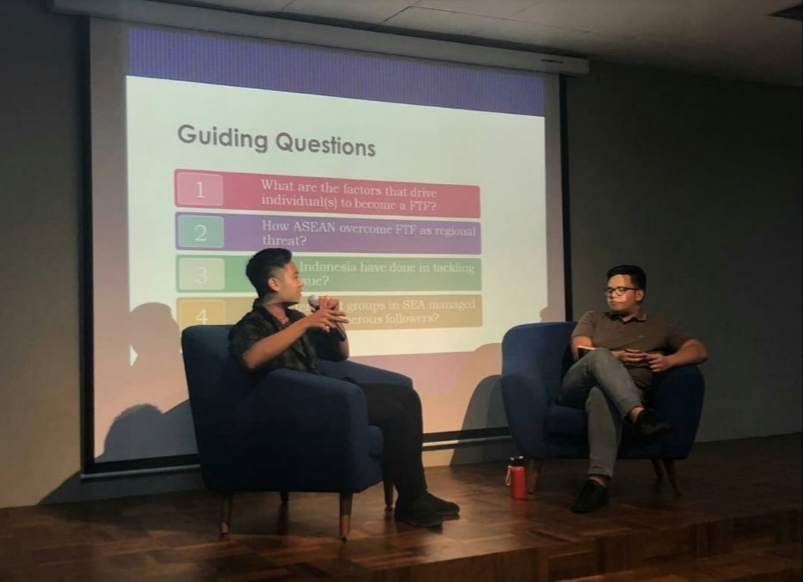
Arvin delivered material on security issues. The focus was specifically on terrorism in Indonesia and Southeast Asia. He started by asking the audience to define terrorism. The audience showed enthusiasm by giving various interesting answers.
Arvin also explained the term FTF. He detailed cases that occurred in Southeast Asia. According to UN Security Council resolution 2178, an FTF is an individual. They travel abroad to plan, prepare, or participate in terrorist acts. They may also provide or receive terrorist training. Arvin stressed that FTF is a problem for both target states and the fighters’ home countries.
He then explained that there is no single definition of terrorism. However, there are three defining criteria. First is the ‘use of violence’. Second is ‘creating a climate of fear’. Third is an ‘ideological or political objective’. Therefore, terrorism can be understood as “systematic use of violence to create a general climate of fear in a population and thus to bring about a particular political objective.”
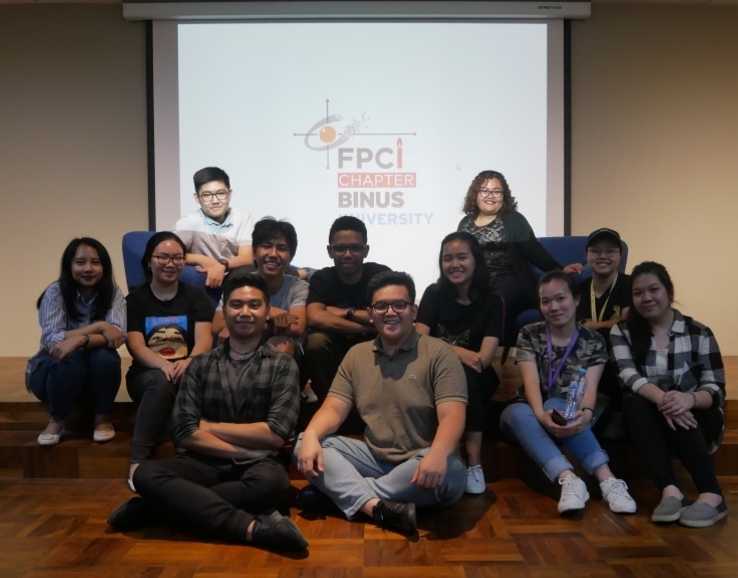
Several countries in Southeast Asia view FTF as a transnational threat. They see its potential to disrupt regional stability. Regional countries include Indonesia, Malaysia, and the Philippines. These nations came up with strategies to overcome the problem. Their methods include tightening border security. They also cooperate with relevant law enforcement agencies.
Finally, Arvin conveyed several countering methods. These include tightening border security and enhancing law enforcement. Additionally, counter-radicalization and violent extremism programs are vital. He gave examples of ASEAN cooperation. Examples include cooperation among counter-terrorism and intelligence agencies. He also mentioned SOMTC and AMMTC. The ASEAN Plan of Action to Prevent and Counter the Rise of Radicalization and Violent Extremism (ASEAN PoA P/CVE) 2018-2025 is another key initiative. The FPD concluded with an active question and answer session.
Comments :