
Webinar ALMI x BINUS
Webinar Highlights Gender in Diplomacy: Launch of Policy Brief “Ibuisme Negara dalam Diplomasi Indonesia.” Or “State Motherism” to Strengthen Indonesia’s Diplomatic Infrastructure
Jakarta, July 3, 2025 — In commemoration of the International Day of Women in Diplomacy on June 24, the Diplomacy Research Team, in collaboration with the Indonesian Young Academy of Sciences (ALMI) and the Center for Bureaucratic and Diplomatic Studies (CBDS), held a webinar titled “Ibuisme Negara dalam Diplomasi Indonesia.” The event served as the official launch of a new policy brief entitled “Memperkuat Infrastruktur Diplomatik Indonesia melalui Kebijakan Berperspektif Gender.” Or “Strengthening Indonesia’s Diplomatic Infrastructure through Gender-Responsive Policy.” The webinar was conducted online via Zoom, starting at 2:00 PM WIB.
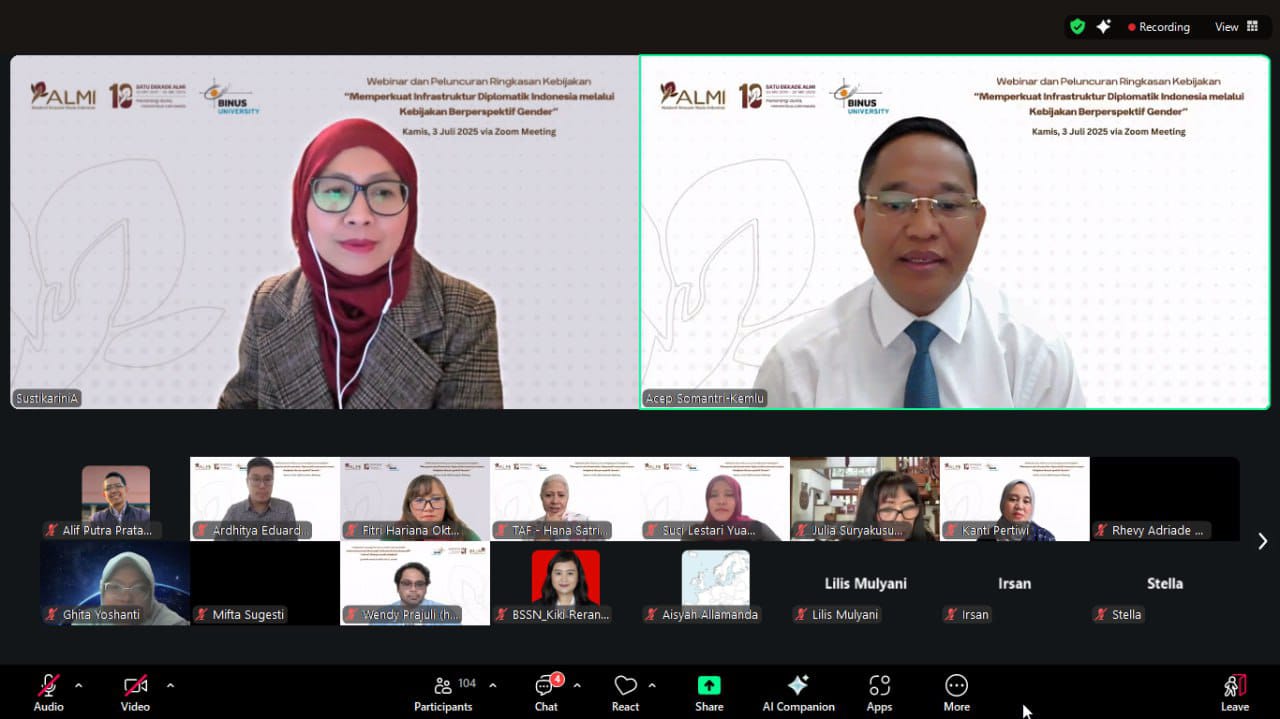
The session brought together researchers, academics, and foreign policy practitioners to explore the urgent need for a gender perspective in Indonesia’s diplomatic framework. While diplomacy is often viewed as a formal activity between states, the research findings reveal that diplomacy is also shaped by everyday social relations; by who is given space to speak, who is heard, and who remains invisible in the policy-making process.
The policy brief highlights that behind Indonesia’s seemingly progressive foreign policy narrative lies a more complex reality shaped by historical and social gender norms. One significant finding is the role of “diplomatic spouses”—typically women who accompany male diplomats—which is often confined to symbolic and unofficial duties. These activities, while underrecognized, carry emotional, social, and even political weight. Yet, these contributions are rarely acknowledged in institutional or policy frameworks.
The webinar emphasized the need for structural reform within Indonesia’s diplomatic institutions, including more inclusive regulatory frameworks that recognize the experiences of women—not only as diplomats, but as integral contributors to the broader diplomatic ecosystem. Among the key policy recommendations presented were: involving women meaningfully in the formulation of foreign policy, recognizing informal roles in diplomacy as legitimate forms of state work, and redesigning diplomatic training programs to embed gender equity.
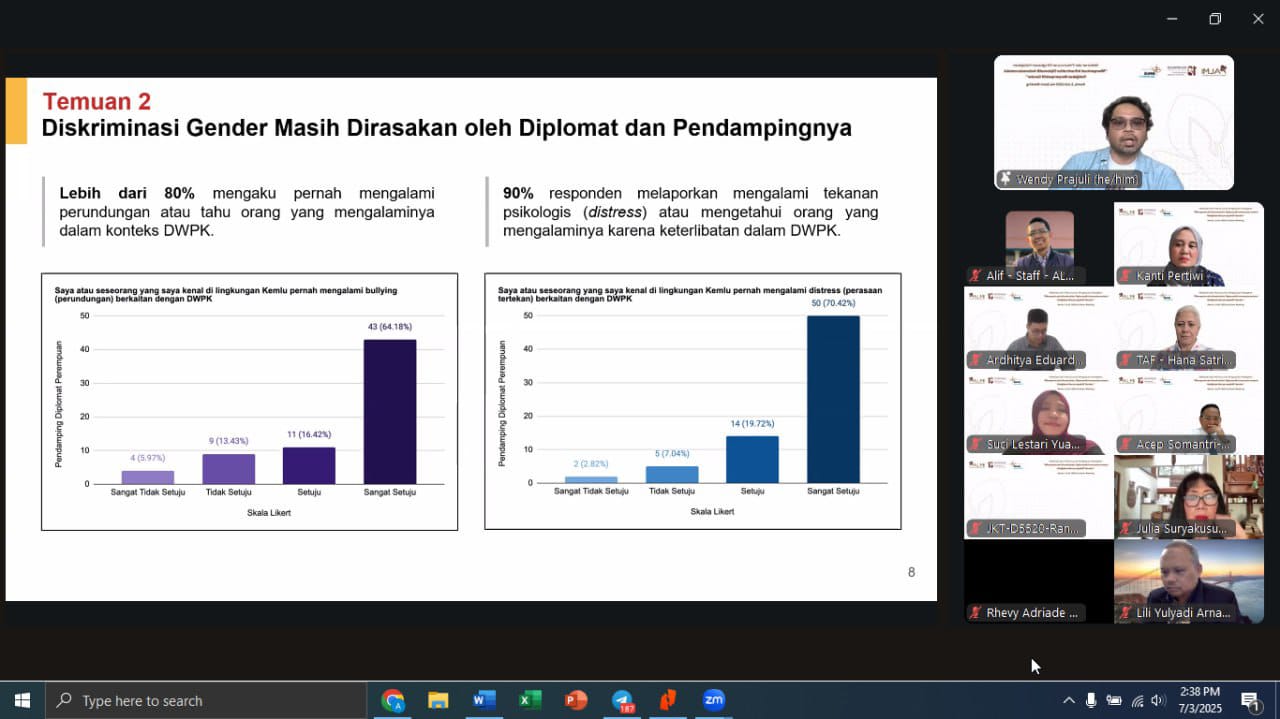
The discussion also underscored the importance of building a diplomatic infrastructure that is inclusive and gender-just, especially in the face of increasingly complex global challenges. By introducing the concept of “state motherism” as an analytical lens, the research team invites policymakers to critically examine how the state constructs and frames gender roles in diplomatic relations—and how policies can be ethically reimagined to respond to these dynamics.
The full policy brief is now available for download at: https://bit.ly/ibuisme.
This webinar marks an important step toward a more reflective, representative, and responsive diplomacy for Indonesia—one that truly considers the invisible labor, experiences, and voices shaping the nation’s role on the global stage.