
Revisiting Park Chung-Hee’s Authoritarian Legacy: “The Man Standing Next” Movie Screening
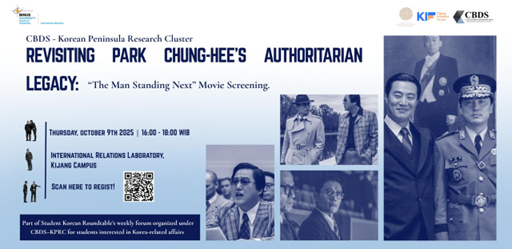
The Korean Peninsula Research Cluster – Center for Business and Diplomatic Studies (KPRC-CBDS) held its second movie screening on Thursday, 9th October 2025, with the main star movie titled “The Man Standing Next”. The screening took place at the International Relations Laboratory, Kijang Campus. This is the event where students, lecturers, and researchers of KPRC-CBDS gathered not only to watch a movie together but also to share insights, knowledge, and discussions afterward.
Before the screening, an opening was made by Mochamad Alvin Dwiana Qobulsyah, S.I.P., M.I.S., who served as both moderator and researcher at the Korean Peninsula Research Cluster (KPRC). In his opening remarks, participants were reminded that current Korea’s democracy is shaped by its deeply rooted history of fighting authoritarianism, one that cost not only energy but also blood and the lives of countless brave heroes of democracy. It was explained that, despite his leadership style, Park Chung-hee is known as the president who kick-started South Korea’s economic miracle, transforming the country from poverty into an industrial powerhouse.
A Movie About Bloody Betrayal of the Right-Hand Man
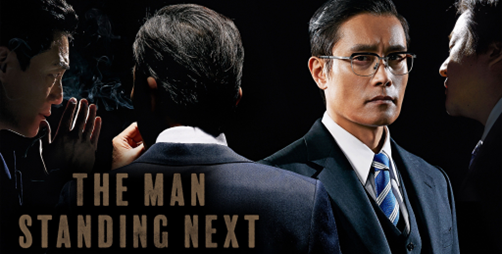
The movie The Man Standing Next unravels the behind-the-scenes events of the 40 days leading up to the assassination of South Korea’s third president, Park Chung-hee. The movie focuses heavily on the political conflict and tension among government officials, particularly between the three main characters: the President, the head of the KCIA (Korean Central Intelligence Agency), and the Chief of the Presidential Security Service, amid South Korea’s political turmoil in 1979.
Historically, the movie provides insight into the struggle for power and influence among government officials during Park’s presidency, reflecting domestic turmoil that escalated due to U.S. intervention in South Korean politics. As the President’s hunger for power grew uncontrollable, most government officials submitted to his orders, some out of conviction or ideology, while others did so for survival. These orders were carried out at the expense of civilians. A group led by one of the president’s right-hand men had endured immense pressure from both internal and external forces. Driven by their ideological beliefs, they felt compelled to act—a betrayal of an old friend for the future of South Korea.
Post-screening discussion
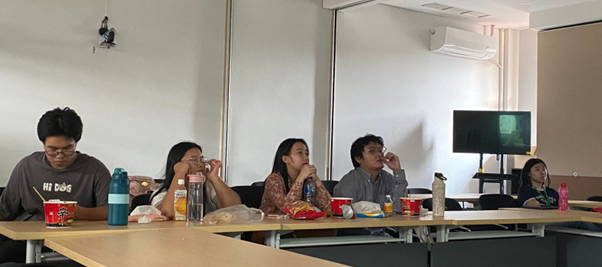
The movie ended with a short documentary showing real historical footage, revealing the truth that even if an act is done for the future, intentional murder will always be a crime. The film left a lasting impression on the audience; everyone remained serious and silent even after it ended. A moderated discussion followed, delving into various topics regarding both the movie and how the future of South Korea was depicted after the events portrayed.
This opportunity not only encouraged discussion but also trained students’ critical and analytical thinking by connecting what happened in the movie to real-world situations. Any movie screening from all genres should not only be seen as entertainment but as part of the media landscape that shapes the world, capable of changing and influencing one’s perspective and knowledge.
A Tasty Noodle: Shin Ramyun
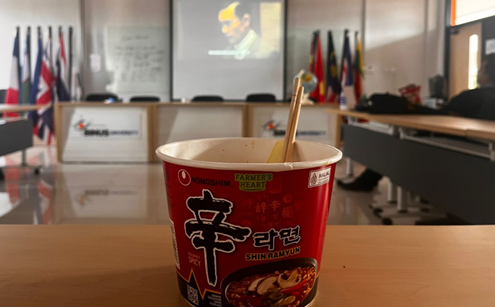
While the movie was the star of the event, a rising second star filled the room. This second star was the perfect companion for a movie, as it is appetizing, satisfying, and perfectly seasoned. It was Nongshim Shin Ramyun, the globally famous noodle brand from South Korea, which reflects the nation’s success as a powerhouse of innovation, culture, and export-driven growth. This success perfectly embodies President Park Chung-hee’s ambition for modernization and industrialization; without his policies, it is unlikely that South Korea would have achieved its current global status
Written by: Ananda Saridevi
Edited by: Mochamad Alvin Dwiana Qobulsyah