Tracing The Turning Point of South Korea’s Democratic History, 1987: When The Day Comes Movie Screening
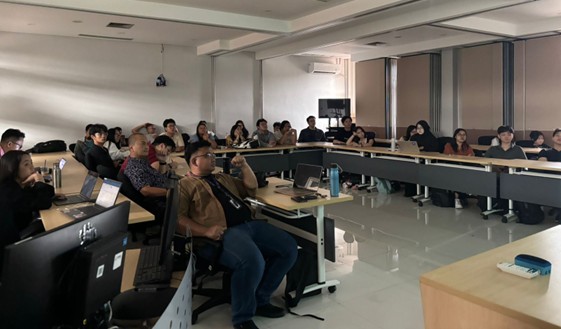
On Thursday, September 11th, the CBDS-Korean Peninsula Research Cluster (KPRC) hosted the “Tracing the Turning Point of South Korea’s Democratic History” event at the International Relations Laboratory, Kijang Campus. Students gathered for an insightful event that featured a special screening of the film “1987: When The Day Comes, “marking the launch of the new Student Korean Roundtable. This event was attended by students and lecturers onsite at the International Relations Laboratory, Kijang Campus.
The event was opened by Mochamad Alvin Dwiana Qobulsyah, S.I.P., M.I.S., as a moderator and researcher at the Korean Peninsula Research Cluster. Alvin highlighted the importance of South Korea’s democratic transition not only from a political perspective but also through cultural narratives such as movies. He noted that the screening was not only intended to commemorate a turning point in Korean history but also to spark meaningful discussion among students on the values of civic courage, human rights, and democratic participation in contemporary contexts.
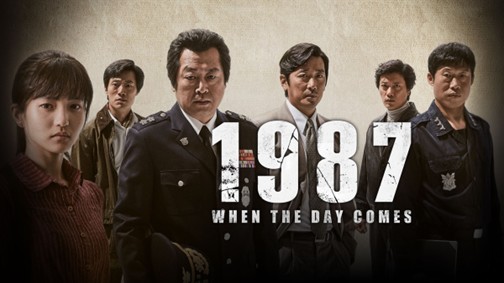
“1987: When The Day Comes” Synopsis
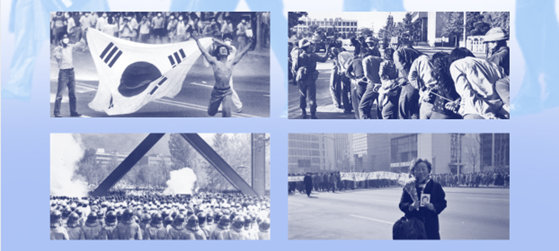
“1987: When The Day Comes” is a political drama based on true events that led to South Korea’s democracy. The 1987 demonstration was escalated by the death of student activists while the government attempted to silence and cover up the incident. The film illustrates how South Korea’s democracy has evolved through its highs and lows to reach its current state, highlighting the fights against injustice. It portrays the courage of journalists, lawyers, and ordinary citizens who chose to speak out despite the risks, reminding viewers that democracy is the result of collective struggle rather than a single heroic act. By weaving together multiple perspectives, the film also shows how solidarity across different sectors of society became the driving force behind the June Democratic Uprising.
Beyond its historical importance, the film resonates strongly with contemporary audiences by offering a lens to reflect on the universal values of justice, human rights, and civic responsibility. For students and young people in particular, the story of 1987 serves as both a history lesson and an inspiration, showing how youth movements can become catalysts for national change. The screening encouraged participants to think critically about the fragility of democracy and the ongoing responsibility to safeguard it, making the film not only a cinematic experience but also an educational journey.
Engaging Discussion Session
Following the movie, attendees participated in an engaging discussion, delving into the historical context and the film’s powerful portrayal of the June Democratic Uprising. This session provided a valuable opportunity for students to connect cinematic storytelling with real-world political and social movements, sparking a meaningful dialogue about the sacrifices that paved the way for modern South Korea.
The success of this kick-off event signals a promising start for the weekly roundtable, which promises to be a hub for students to explore various aspects of Korean culture, history, and politics. If you’re interested in future discussions and events, follow @cbds_binus and @irbinus on social media for updates.