








Roseno Aji Affendi and Benedictus Nathaniel Davin, Student and Lecture, Bina Nusantara University
Singapore’s Sovereign Wealth Funds (SWFs), the Government of Singapore’s Investment
Corporation (GIC) and Temasek Holdings, has emerged as a significant institution with
strategic importance in both global and regional contexts (Wu, 2008). Wu (2008) and Shih
(2009) explain the grand plan of establishing a SWF decades ago is no longer solely
functioning as a means of domestic economic survival but rather has converted into a
vehicle for expanding Singapore’s economy overseas. The SWF undergoes a transformation,
assuming the role of an international political and economic instrument within the context
of Southeast Asia’s regional dynamics or geopolitical landscape (Liu, 2023; Schena et al.,
2022).
Based on the principles and explanatory from Rozanov (2005), which are widely
accepted in the field, it can be identified that SWFs are specialised funds controlled by the
governments and established with the objective to achieve macroeconomic goals [1]. The
influence of SWF as a financial powerhouse and technological advancements significantly
shapes global politics and the economy as Susan Strange posits that credit creation entails
the generation of purchasing power by means of credit (Strange, 1994). The aforementioned
loan funds can thereafter be utilised for either consumption or investment purposes, hence
stimulating economic activity (Strange, 1994).
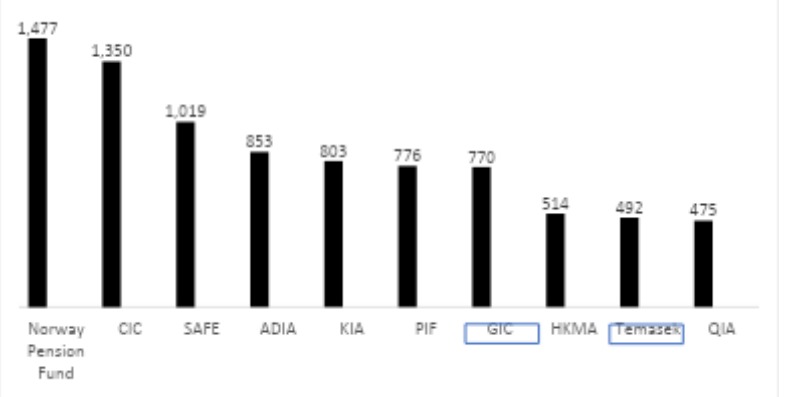
Figure 1. Rankings by Total Assets of Sovereign Wealth Fund (US$ Billion)
Source: swfinstitute.org (2024)
See Adam Dixon “Are Sovereign Wealth Funds Changing the Economy?”, IE Insights (2023),
https://youtu.be/F76gJqiUE78?si=DoMO2-1uYHrVB9hZ
Figure 1 identifies that GIC and Temasek Holdings are among the top ten SWFs worldwide in
terms of valuation (SWF Institute, 2024). In the Southeast Asian region, GIC and Temasek
have been observed to engage in substantial investment activities. According to the Tech In
Asia database, both GIC and Temasek Holdings have allocated sums over US$12.2 billion
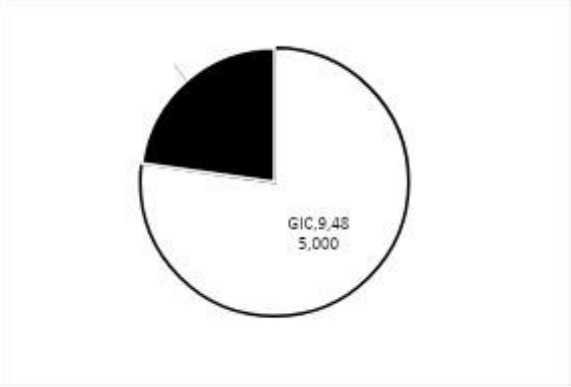
each (Tech In Asia, 2023a, 2023b). Based on figure 2, Temasek possesses a portfolio of
investments in 33 companies located in Southeast Asia, amounting to a cumulative
investment of US$2.7 billion. Despite the limited number of Southeast Asian enterprises in
its portfolio and GIC has achieved a substantial investment value of more than US$9.4 billion
(Tech In Asia, 2023b, 2023a). Both SWFs have made investments in a total of 42 enterprises
within the area with Indonesia being the spot centre (Global SWF, 2022; Varma & Boulton,
2019).
Figure 2. Investment being allocated by GIC and Temasek at SEA Companies
Source: Author’s own compilation based on techinasia.com/database (2023).
Based on both figures, Singapore, being the dominant power in the Southeast Asian region
and classified as a “developed country,” possesses the necessary capabilities and can only
anticipate positive outcomes from the investments it undertakes (Lim, 2017; Pei & Koh,
2023). These funds are responsible for managing assets in order to attain financial
objectives, which may include investments in foreign financial assets to access bigger
markets (Monk, 2009). In conclusion, the figures examine the process of how GIC and
Temasek to be considered as a tool for financial influence, seeking profits and
political-economy will (Jen, 2010; Strange, 1994). Singapore, as a dominant force in the
Southeast Asian region, holds a significant national interest through its investment funds in
enterprises operating within Southeast Asia
Short Bio
Roseno Aji Affandi is a fellow and senior researcher at CBDS (Centre for Business and
Diplomatic Studies) under the Department of International Relations, Subject Content
Coordinator, and a lecturer of International Relations at Bina Nusantara (BINUS) University.
He has been consultant and trainer for several national and multinational clients, including
the State Ministry of Co-operatives and Small/Medium Enterprises, Surakarta and Sukoharjo
local government, and International Labour Organization. At the same time, he is the
director and owner of Goldengrade Consulting, a business development specialist, and the
creator and developer of the Revolution of Hopes (RoH) technique. His latest research
project and work had been published was the Module Paradiplomacy I: Peran Internasional
Pemerintahan Daerah: Tata Kelola, Negosiasi, Dan Diplomasi (2024) and Revolution of
Hopes. Reneasia (2014). He can be contacted by roseno.affandi@binus.ac.id
Benedictus Nathaniel Davin is a research associate at CBDS (Centre for Business and
Diplomatic Studies) under the Department of International Relations, former intern at
Centre for Strategic and International Studies (CSIS), and an international relations graduate
from Bina Nusantara (BINUS) University. His latest work had published on Analisis CSIS on
Peran Indonesia Investment Authority dan Hambatan Investasi dalam Negeri (2024). He can
be contacted by benedictus.davin@binus.ac.id.
References
Global SWF. (2022, September 23). Indonesia: The Venture Capital Frontier for Singapore’s
Sovereign Investors. Global SWF. https://globalswf.com/news/indonesia-the-venture-capital-frontier-for-singapore-s-sovereign-investors
Jen, S. L. (2010). Economics of Sovereign Wealth Funds. INTERNATIONAL MONETARY FUND.https://doi.org/10.5089/9781589069275.071
Lim, H. (2017). Singapore. In P. Intal (Ed.), ASEAN and Member States: Transformation and
Integration (Vol. 3, pp. 199–217). Economic Research Institute for ASEAN and East Asia.
Liu, Z. Z. (2023). Sovereign Funds. Harvard University Press. https://doi.org/10.2307/jj.2915805
Monk, A. (2009). Recasting the Sovereign Wealth Fund Debate: Trust, Legitimacy, and
Governance.
New Political Economy, 14(4), 451–468. https://doi.org/10.1080/13563460903287280
Pei, S. F., & Koh, B. P. (2023, February 4). Singapore’s potential as a regional hub for impact
investing. The Business Times.
Rozanov, A. (2005). Who Holds the Wealth of Nations. International Journal of Central Banking,
15(4), 52.
Schena, P. J., Vida, J. F., Aguilar, J. C., Blanco, A., & Bernal, J. (2022). SOVEREIGN WEALTH FUNDS 2021.https://docs.ie.edu/cgc/SWF%202021%20IE%20SWR%20CGC%20-%20ICEX-Invest%20in%20 Spain.pdf
Shih, V. (2009). Tools of Survival: Sovereign Wealth Funds in Singapore and China. Geopolitics,
14(2), 328–344. https://doi.org/10.1080/14650040902827799
Strange, S. (1994). STATES AND MARKETS (Second). Continuum. SWFInstitute. (2024, October 4). Sovereign wealth fund rankings.
Tech In Asia. (2023a). GIC-Government of Singapore Investment Corporation (新加坡政府投资公司). Tech In Asia Database. https://www.techinasia.com/companies/gic-1
Tech In Asia. (2023b). Temasek Holdings. Tech In Asia Database.
https://www.techinasia.com/companies/temasek-holdings#google_vignette
Varma, S., & Boulton, A. (2019, January 16). The Next Private Equity Hot Spots in Southeast Asia. Bain & Company.
Wu, F. (2008). Singapore’s Sovereign Wealth Funds: The Political Risk of OverseasInvestments. S. Rajaratnam School of International Studies, 166